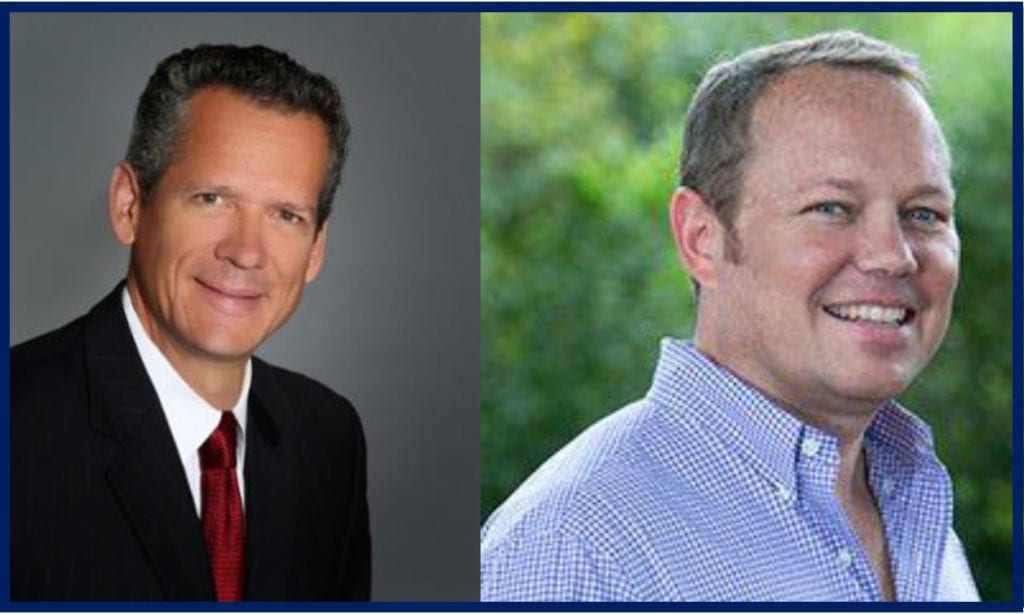
Chip Summers worked 2,900 hours a year for over 25 years. Every Saturday. Some Sundays. Always behind. Then he made a series of decisions that transformed his firm.
He raised prices across the board. He moved on from high-maintenance, low-return clients. He gave up control and let his staff handle work from start to finish. He invested in technology that made everyone more efficient. And in December 2025, for the first time in over 25 years, he was caught up. He had almost nothing to do. It felt weird, but wonderful.
Today, Chip’s eight-person firm in Orangeburg, South Carolina doesn’t work Saturdays anymore. They close every Friday after tax season. During tax season, they’re only open half days on Fridays. His staff isn’t burnt out. His clients bring organized documents instead of shoe boxes. And he’s serving as Vice Chair of the South Carolina Board of Accountancy while running a healthier practice than he ever thought possible.
This is the fourth episode in our Power of Focus series, where we explore how CPA firm owners use focus as a strategic advantage. Chip’s story shows that transformation doesn’t happen overnight, but when you touch every aspect of your practice with intentional changes, the results compound.
The conversation covers:
- How working 2,900 hours a year with no end in sight became the motivation for change
- Why pricing was only part of the transformation, giving up control mattered just as much
- The year they set minimums and lost fewer than five clients
- How technology investments made the team more efficient without increasing hours
- Why closing Fridays after tax season boosted staff morale and reduced turnover
- The decision to exit attestation work and focus entirely on tax planning and consulting
- How being upfront about pricing changes led to almost zero pushback from clients
Chip’s biggest lesson? You can’t do it all yourself. Most accountants want to touch everything from start to finish. But when you structure your staff to handle work properly, invest in the right technology, and price your services to match the value you deliver, you create capacity you didn’t know was possible. And that capacity changes everything.
This episode is for firm owners working too many hours for the revenue they’re generating, leaders curious about how to delegate without losing quality, practitioners wondering if it’s possible to run a firm without weekend work, and anyone ready to transform multiple aspects of their practice at once.
TIMESTAMPS
00:14 – Introduction: Chip Summers, Orangeburg CPA since 1991
01:34 – Serving as Vice Chair of SC Board of Accountancy
02:36 – The CPA firm that said yes to everyone for 45 years
03:18 – Why being everything to everybody became impossible
04:01 – Working 2,900 hours a year with no end in sight
05:32 – Caught up for the first time in 25 years: how it felt
06:10 – You can’t do it all yourself: restructuring Accounting staff workflows
07:17 – Technology investments that made everyone more efficient
07:29 – Discussing pricing upfront and what changed
08:39 – From shoe boxes to organized Tax clients
09:24 – A completely different CPA firm than four years ago
10:21 – No more Saturday work for staff
10:57 – Raising prices 5-10% every year and losing fewer than five clients
12:03 – The biggest change: giving up control
13:27 – When staff burn out, they leave, and someone else gets your investment
14:03 – The story of giving away a client file on his first month
15:21 – Book: The Let Them Theory by Mel Robbins
15:45 – “Nobody is ever going to die from an accounting emergency.”
BOOK RECOMMENDATION
The Let Them Theory by Mel Robbins
TRANSCRIPT
Brannon Poe (00:14): All right. Welcome to the Accountants Flight Plan podcast. I’m excited to talk with Chip Summers today. He is a CPA based in Orangeburg, South Carolina. He’s been in practice since 1991. And this is part of our Accounting Practice Academy series. Chip was a member a couple of years ago in the Academy and his story is one I think a lot of you are going to be able to relate to, especially if you felt like you’re working harder, but not necessarily making the money that you should for the amount of work you’re doing.
A few years back, Chip made some pretty bold decisions around pricing and client selection and it completely transformed his firm. He let go of clients, which can feel uncertain. He ended up coming out on top with that decision. And sometimes that’s counterintuitive. You have to prune before you can grow. So I wanted to get Chip to walk us through what that looked like, how he approached those conversations, and what he’s learned about pricing and capacity since then.
So Chip serves primarily clients in agriculture and construction across South Carolina. He runs a tax-focused practice and currently serves, and I did not know this until just now Chip, as Vice Chair of the South Carolina Board of Accountancy. Thanks for being here.
Chip Summers (01:31): Thank you, glad to be here.
Brannon Poe (01:32): Yeah, when did you join the board?
Chip Summers (01:34): Probably about four years ago. This is my second year as Vice Chair. I tell you, serving on the board, I had no idea what all they did. It is a very important board. Everything that board does is really focused on protecting the citizens of South Carolina from making sure that CPAs are in compliance with continuing education, peer review, constantly getting white papers and different documents from the AICPA and NASBA and trying to make sure that we update the laws for South Carolina CPAs. And as I’m sure you’re aware, it’s really becoming more and more controversial now with private equity.
Brannon Poe (02:27): Yeah, I can imagine because you’ve got attestation services and you’ve got conflicts of interest and all sorts of issues to deal with around that. So interesting. Well, price increases, let’s talk about that a little bit.
Chip Summers (02:36): Sure. You know, we took your Academy and to this day, probably three or four years ago when we did it, we practice what we learned every single day. From pricing increases all the way to, our firm was started in 1980 and it was take anybody, try to be everything to everybody. And that in this day and age is not the right approach.
Brannon Poe (03:16): It’s getting harder and harder to do that, isn’t it?
Chip Summers (03:18): It is. It’s getting very, very hard. You can’t be in, we are a small firm. There are eight of us in here, two partners. And to generate attestation work, to generate income tax return consulting, trying to keep up with technology and different things like that is nearly impossible. And actually 2026 will be the first year that we will be out of attestation work. With the complexity of peer review and keeping up with all of the guidelines, trying to maintain independence, it’s impossible. And so our strength is income tax planning and consulting and that’s our focus and that’s what we’re going to stick to.
Brannon Poe (04:01): That’s nice. Yeah. I think a lot of people that we see come into Academy, they usually reach some sort of point of, “Hey, I gotta do something.” Either they hit a real hard wall and a pain point, or they’re trying to get ready for an exit, or they’re kind of entrepreneurial and they want to find out new ways to do things. I feel like you were in that, “Hey, I’m working really too many hours. I’m working hard to keep my head above water with the workload that I have.” Is that the camp you would put yourself into at that time?
Chip Summers (04:35): Without a doubt. Yeah, when you work 2,900 to 2,950 hours per year, I mean, that is an enormous amount of time. And what we realized is you’re not getting the return on all those hours, not only the impact it has on you being away from your family, constantly being down here, people constantly calling you. We restructured and started following what we’ve learned, moving on from the high maintenance, low return on investment clients. And in doing that, December of 2025, that was the first year in over 25 years that I actually was caught up. In the month of December, I had almost nothing to do, which is amazing.
Brannon Poe (05:27): Yeah, how’d that feel?
Chip Summers (05:32): I mean, it felt weird. It really did. You don’t have the constant pressure of constantly having to get things done and always being behind. For me, I’m a people pleaser and try to make everybody happy at my expense. And for the first time, you’re caught up. And you’re not having people call you going, “Hey, where’s my stuff?” And that is a wonderful feeling, wonderful feeling.
Brannon Poe (05:57): Yep. So it took you a couple of years of just implementing and repeating and you can’t do it all at once, right?
Chip Summers (06:10): Well, you know, that and you can’t do it all yourself. What we have learned is that you’ve got to structure your staff to really be able to help you. And when I say restructure the staff, I mean, it’s a very simple example is something comes in, somebody goes through it. They go through it and make sure that, the number of clients that don’t even open their mail, you know, the mail’s open, the things are organized. Somebody’s going back and looking at a prior year and seeing what’s missing and reaching out to the client saying, “Hey, you don’t have this, this, and this.” That way before it ever comes to me, it’s ready to work on.
Another thing, Brannon, is technology. Using different technologies that are out there, whether it’s like a SafeSend project, a software platform, and there’s another one that we use to send out information to clients to upload their data. Don’t focus so much on what the software cost, but figure out what it’s gonna do to make you more efficient so you can do more work or be better at your work.
Brannon Poe (07:17): Yeah, it’s better for the clients. It sounds like you touched every aspect of your practice with pricing and staffing and technology and systems. It sounds like you kind of had to touch everything.
Chip Summers (07:29): Yeah. And the phone rings all the time for new clients, which is a blessing because I mean, I think we’re a good little firm. But you interview clients, you see whether or not it’s a fit. And the other thing is, you discuss pricing upfront and you don’t price things to get work anymore. You price things that are gonna be comfortable for you and fair to them. And I think when you have those discussions upfront, it makes them aware of number one, what they can expect in a fee. They know it upfront. And if the fee is gonna change, you pick up the phone and you call them and say, “I got into this and I can see that I’ve got to do this, this and this. And either you can take care of it or we’re going to have to adjust the fee.” And nine times out of 10, Brannon, they’re fine with that. As long as you’re upfront with them, that’s the most important thing is that everybody knows where they stand at all times.
Brannon Poe (08:34): How has the quality of your work improved in the firm, would you say?
Chip Summers (08:39): Oh, I mean, it has increased dramatically. From shoe boxes to people that bring things in in an organized format labeled to try to do everything to make your life easier. The other thing is setting timeline expectations that you can’t bring this in on March 26 and expect this to get turned around by April 15th. Don’t hurry them, don’t push them, because you’re not sitting there waiting on their stuff.
Brannon Poe (09:17): Yeah. So you really went through a transformation over the last couple of years. You’ve transformed your firm. Would you say that?
Chip Summers (09:24): Without a doubt, without a doubt. It is a completely different firm than it was four years ago.
Brannon Poe (09:32): Did you lose a lot of staff along the way or has it been the same team?
Chip Summers (09:37): We lost one person, but everybody else has stuck around. And the beauty of it is they’re not burnt out. And actually, I’ll take it a step further. This year I hired a staff person to help out during tax season and before tax season even starts. And his primary job is just to help make sure the office is organized and to give the staff what they need. And everybody likes what they’re doing now because they’re not stressed all the time.
Brannon Poe (10:16): Yeah. And your staff, are they putting in as many hours as they used to?
Chip Summers (10:21): Absolutely not. No, absolutely not. In fact, we close the office after tax season every single Friday. And during tax season we’re open half a day on Fridays. And for 30 plus years, every Saturday and some Sundays, our staff was down here working. I mean, we ate lunch as a group every Saturday. Now, our staff, they don’t work on Saturdays.
Brannon Poe (10:47): Wow, that’s wonderful. Yeah, that’s the kind of transformation that a lot of people, I mean, they can’t imagine that that’s possible. But it is when you make these changes.
Chip Summers (10:57): It is. And you know, the other thing is, historically we had left our billing rates pretty stationary. They didn’t really move a lot. And what you realize is that every other expense has continued to go up. You’ve continued to give raises, your other overhead, whether it’s your insurances, your software costs have absolutely gone crazy as far as cost. And we generally go up every single year, anywhere from five to 10% across the board every single year. And you’ve really got to do that. That was a tough decision for me to consider at first. Going up on people thinking, well, they can’t afford that, they’re going to leave. And I think the first year that we set minimums for returns, I think we lost less than five clients. And since then, we’ve continued to go up, continue to go up. And it’s not that we’re going up to put more money in the partner’s pocket, it’s really because you need those resources to put back into your staff, your technology. And that’s really where it’s going, is just to keep up.
Brannon Poe (11:48): Yeah. If looking back, was there one particular thing that you think had the biggest impact on the changes, just the improvements to your firm? For a lot of people, it’s that pricing. That’s the lever that makes the biggest difference, I think, for a lot of people is the pricing.
Chip Summers (12:03): Brannon, I really, I mean, I do think that’s part of it, but I think the other part of it is giving up control. Because most accountants, they want to touch everything from start to finish. And you’ve got all these people around, utilize them. And that was one of the biggest changes is utilizing your staff. I mean, for 30 plus years, every Saturday and some Sundays, our staff was down here working. Now, our staff, they don’t work on Saturdays. The other thing we did is we close after tax season, we close every single Friday. And during tax season, we’re open half a day on Fridays. And doing those types of things, it boosts your staff morale. They’re not burnt out. And when they’re not burned out and you need them to help you, they’re willing to do it.
Brannon Poe (13:11): Yeah, that’s a good way. And you know, it’s a challenging situation if a firm gets into a spiral where everybody’s working too hard and then the staff are working too hard and then they start to leave and then your turnover and just everything gets more difficult.
Chip Summers (13:27): You’re exactly right. When they get burned out and they get another opportunity for less work, similar money, they’re gonna jump ship. And you get in accounting, as you know, you get somebody trained up, you’ve got a serious investment in that person. And the last thing you want is for somebody else to get the return on that investment, you want it.
Brannon Poe (13:50): Exactly. Well Chip, we’ve covered a lot of ground. I got two final questions. One is a story. I like to ask our guests a memorable story. Do you have something you can share?
Chip Summers (14:03): The funniest and funny now, the worst thing that has ever happened to me was, I came straight out of college, came to work. And I mean, I’d only been there just a couple of months and another CPA came into our office and asked to, he had picked up one of our clients. And so he came over to get copies of documents so he could start his file. And he came over. No one was at the front. I went up front and he said, “I’m here for this particular file.” I didn’t know any better. I went and picked up the file and gave it to him, told my boss what I had done. He was livid, livid. And I ended up having to get in the car and go over to that other accounting firm and say, “Can I get that file back? I’ll make a copy and I’ll bring it right back to you.” And we all laughed about that for years after that. That was tough.
Brannon Poe (15:00): Did the other CPA laugh when you went to pick up the file?
Chip Summers (15:02): He was like, wasn’t sure I was supposed to have it at all.
Brannon Poe (15:06): Yeah, side note, you and I were in school together at University of South Carolina and we were friends. I remember we went to Orangeburg one day and played golf. I think you grew up in Orangeburg. So time flies. One last question. Do you have a book recommendation for our audience?
Chip Summers (15:21): I did. Born and raised. Yeah, The Let Them Theory by Mel Robbins. An outstanding read.
Brannon Poe (15:35): Great book kind of about boundaries, which is pretty important for a business owner.
Chip Summers (15:39): It is. Yep, without a doubt. Nobody is ever going to die from an accounting emergency.
Brannon Poe (15:45): Yep, that’s right. Well Chip, wow, thanks for sharing this. I mean, I’m really impressed with how many aspects of your firm you have touched and how you’ve transformed it over a relatively short period of time and joined the board of the South Carolina Board of Accountancy in that time too. You really took it on.
Chip Summers (16:07): Well, I mean, it’s an honor to be on that board. I’ll tell you that there are some really, really, really good people on that board. And they and SCACPA do an important job for the state of South Carolina.
Brannon Poe (16:19): Yeah, for sure. Well, thanks for coming on. If people want to reach out to you online, what’s the best way for them to connect with you?
Chip Summers (16:22): The easiest way is LinkedIn.
Brannon Poe (16:35): Awesome. All right Chip, thanks for being on.Chip Summers (16:38): All right, thank you, Brannon. Take care.