Seven episodes. Dozens of real-world examples. One recurring answer.
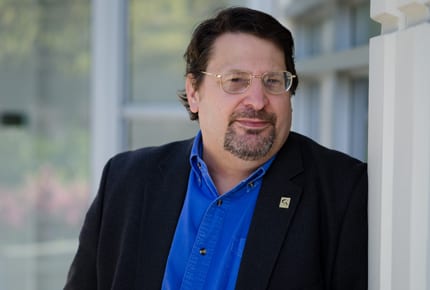
Brannon Poe and Ian Brennan sit down one more time to close out the Power of Focus series. Throughout this series, the pattern that emerges is hard to ignore: the firms that get results are the ones that get intentional about where they put their energy.
Ian Brennan is the workshop director for Accounting Practice Academy and has been with Poe Group Advisors for seven years. He helped build APA from the ground up and works one-on-one with accounting firm owners to help them make the changes that set their practices on a better course. In this closing episode, Ian turns the mic around and asks Brannon to reflect on what the series revealed, where firm owners should start, and what focus actually looks like in practice.
The Conversation Covers:
- Why creating capacity is almost always the right first move
- How the 80/20 Principle applies to clients, services, staff, and time in a CPA firm
- Why unfocused growth leaves accounting firms overextended and exhausted
- How a clear vision shared consistently with your team drives better hiring, retention, and daily decisions
- Why pruning your client list is not a one-time event but an ongoing part of running a healthy accounting practice
The tools are simple, but the work is not always easy. Focus is not complicated as a concept, but it requires creating the space to act on it, and the habits that make it sustainable. That space does not appear on its own. Brannon’s closing suggestion: find a mastermind or peer group, surround yourself with other business owners, and give yourself a structure that keeps the bigger picture in view.
This episode is for accounting firm owners who have listened to the series and are ready to identify their first move, practitioners curious about how the 80/20 Principle applies to their client list and services, leaders wondering how to build a team culture that attracts and retains the right people, and CPA firm owners ready to shift from working in the firm to working on it.
Book Recommendation
The 80/20 Principle by Richard Koch
Timestamps
01:04 – Welcome to the final episode of the Power of Focus series
02:20 – Ian opens the conversation: recurring themes across the Power of Focus series
03:40 – Why focus is a simple concept with a powerful and consistent payoff
04:40 – Why creating capacity is the essential first step for any CPA firm transformation
05:25 – Where Brannon’s focus on focus came from: the 80/20 Principle by Richard Koch
07:06 – Letting go: Greg Toner and Bill and Chris Murphy as standout examples from the series
07:54 – Staffing in a shrinking talent pool: why culture is the most durable retention strategy 08:54 – How client selection and service mix affect team morale and turnover in CPA firms
09:39 – Why sharing a clear vision with your team matters more than most firm owners realize 10:27 – What Brannon has observed about vision when selling accounting firms in the M&A space
12:30 – How a focused vision makes your CPA firm more attractive to job candidates
14:04 – Why being a jack of all trades limits margins and exhausts accounting firm owners
15:57 – Greg Toner’s growth model: how knowing the recipe made scaling repeatable
16:21 – Brannon’s closing thought: find a mastermind and surround yourself with other firm owners
17:08 – Ian closes the series: seven episodes, real results, an invitation to dive in
Transcript
Ian: Hey everyone. I’m Ian Brennan, the workshop director for Accounting Practice Academy. Just jumping in here before the episode to let you know that this interview is part of a short podcast series Brannon and I coordinated called The Power of Focus. We asked ourselves what really separates great accounting firms from the rest, and we realized the answer is focus. Focusing on where you as a firm owner add value, the right staff, the right clients. Proper focus shapes your practice, and unfortunately, so does a lack of it. In this series, you will hear from seasoned firm owners, Accounting Practice Academy alumni, and industry experts, all sharing real-world examples of what happens when you focus on the right things. If these conversations spark some ideas and you would like more in-depth tools for practice improvement, you can visit AccountingPracticeAcademy.com. That is all for me. Now enjoy the episode.
Brannon: I’m Brannon Poe, and this is The Accountant’s Flight Plan podcast, where you can enjoy engaging conversations about mergers and acquisitions and accounting practice management. Listen in on strategies to build a more fun and valuable accounting firm.
All right, welcome to The Accountant’s Flight Plan podcast. I’m here with a guest who has been on before, Ian Brennan. I’ll let him introduce himself in just a moment. We are doing our final episode of our mini-series all about the Power of Focus. If you haven’t listened to the earlier episodes, I encourage you to go back and listen to all of them. If you are looking to build a better firm, we have some really good content for you.
So without further ado, Ian, tell our audience who you are.
Ian: Hi, I’m Ian Brennan. I am the workshop director for Accounting Practice Academy, part of Poe Group Advisors. I’ve been with Poe Group for about seven years now, and I work one on one with accounting firm owners to help them focus their practice and make changes that set them on a course toward the firm they want. I’ve been with APA since its very beginning, and I’m excited to be back.
Brannon: Ian actually helped us film the original workshop, so he has been with it from the start. Today Ian is going to be asking me some questions about the Power of Focus series and the episodes we have recorded and posted. We want to wrap up the series with some reflections. We have gone through a lot of conversations with great firm owners who have focused their practices, and with industry experts on how you can focus yours.
Ian: To get started, what are some themes or areas that you have noticed recurring throughout this series, and recurring across practices that have focused their firms?
Brannon: One thing that is interesting, and you have witnessed this when we are in a workshop, is how common people’s problems are. It does not matter whether their firm is from Western Canada or the southern United States or Hawaii. The same problems show up. I have had many years involved with EO, the Entrepreneurs Organization, and I have met business owners from all over the world. I remember going to the Global Leadership Conference in Toronto, and it was striking how business owners from India had the same challenges as business owners from Spain. That is definitely a common pattern.
And the thing about focus, the power of focus, is that it is actually not that hard to be focused once you have identified your priorities and put your efforts in that direction. Results come. Conceptually, being focused is a simple idea, but it is a powerful one. We often say the tools themselves are simple, but the work is not always easy. It takes effort. But over and over again, it works.
Ian: If someone were to listen to all of the episodes in this series, and they have heard us talk about pricing, staffing, and client selection, and they feel a little overwhelmed by the possibilities, what do you think the first lever is that they should invest their energy in? I know it is never exactly paint by numbers and every firm looks different, but if you were coaching someone on one direction, where would you lead them?
Brannon: It is usually about creating capacity first, so that you can work on the other strategies. It is not uncommon, especially in this industry, for owners to feel overwhelmed. Maybe they are in a high-growth mode, maybe they are understaffed, maybe they have had some turnover. An unfocused firm can be really hard to manage. You feel like you are putting out fires all the time. Sometimes the first thing you have to do is make yourself some space, give yourself room to do the strategy work that is really going to take your firm where you want it to go. Because if you are overwhelmed, overworked, and too busy, you are probably not going to make progress on the strategic side. You will default back to old habits. To really get that change going, create capacity first.
Ian: Where did you develop this idea of focus for yourself, in your own business and in coaching accounting firm owners?
Brannon: It really came out of a book I read about the Pareto Principle, which I think you and I talked about on our very first opening episode of this series. The book is “The 80/20 Principle” by Richard Koch. I listened to it as an audiobook, and it was just a profound, first-principles kind of concept. If you are not familiar with the Pareto Principle, it is also known as the 80/20 Principle, which essentially says that 20% of your inputs are responsible for 80% of your outputs. This pattern shows up throughout human behavior. Twenty percent of the clothes in your closet get worn 80% of the time. Twenty percent of your floors get 80% of the foot traffic. When you apply that to a business, it makes for some really interesting observations. You apply it to your services, to where your time and energy go, to your staff, to your clients. Tendencies show up everywhere.
Ian: I want to circle back to the idea of letting go and creating capacity. From the episodes we have done, whether talking to Greg or Rick or Chip, are there any stories that stand out of firms that did a great job of letting go?
Brannon: Greg Toner is definitely a good example. But Bill and Chris Murphy are also a strong example. They had a pretty solid team already in place, which made it a little easier for them to let go more quickly than some of our other members who have gone through the program. Having a good team already in place definitely helps you get results faster.
Ian: I remember them talking about the critical importance of holding on tightly to good team members, and being willing to go through four or five hires if needed, and making a decision quickly when someone is not working out, because a poor fit can affect the whole team.
Brannon: Exactly. And it keeps getting tougher as time goes on, with fewer people sitting for the exam and fewer accountants entering the industry.
Ian: What advice do you have for firms that are focusing on staffing, but it is not quite working? Where can they put their energy that might be more productive?
Brannon: That is a complicated answer and really depends on the firm and their circumstances. But I am a big believer in how much culture plays a part in retaining good employees and attracting new ones. That is a hard thing to build. It takes time, intentionality, and effort. So if there is a lot of work to do on team and culture, your expectations need to reflect that. It might take a little longer. Often the things that erode culture and cause turnover are tied to client selection, not offering the right service mix, not giving the team time to breathe, and owner stress finding its way down to the team. It can be a virtuous cycle or a vicious cycle, depending on where you are headed.
Ian: Can you speak more to how the owner influences the team from a top-down perspective?
Brannon: It is very contagious. Sharing the vision is super important, and I think some people do not realize how important it is. A generic mission statement pinned to the wall is not the same as carrying a vision through the team. People need to know where the business is going, what the plans are, and how they fit into those plans. If they do not have that, they get uncomfortable. And if the owner’s vision is just, we are going to do the same thing today that we did yesterday, that is not a compelling direction for anyone.
I have noticed this when selling businesses, because a lot of our workshop content is informed by our M&A work. When a new owner comes in with a big, exciting vision for the business they are acquiring, and can articulate that to the team, it creates an enormous amount of excitement. Some of our most successful acquirers have had a clear vision, gotten the team on board, and done really interesting things as a result.
Ian: And it comes down to focus. Having a vision involves carving out time to define what your business looks like in ten years, five years, three years, and this year. The ten-year view does not have to be detailed down to the minute. It just needs a direction. Being able to sit down with your team or your partners and communicate that vision helps build and focus the firm for years to come. It can adjust over time, but having it and communicating it regularly, at least quarterly, keeps everyone oriented.
Brannon: We communicate vision on a regular basis here, in different ways. Our team has a Monday morning meeting at 11:30, all hands on deck, thirty minutes. We talk about what is new in marketing, what is new in operations. Some of that vision-casting just gets peppered in consistently. It provides forward momentum and affects how each team member thinks about their work in their department. It builds excitement. A focused vision allows people to get on board quickly, work hard, and have clear boundaries.
For hiring, it also makes you more desirable as a company. If you can point to a vision and a candidate says, yes, I want to join that team and help build that future, you will attract the right people. A strong team tends to attract more strong team members. We interviewed a candidate recently and asked what attracted them to the role. The answer was that they wanted to work with people doing interesting things, and after reading our about page and learning about our team, they felt like those were people they could work with. That was a really interesting glimpse into how a candidate makes a hiring choice.
Ian: I want to shift gears to the idea of growth. We talked to a lot of firms that are chasing growth. What comes to mind when you think about the difference between focused and unfocused growth?
Brannon: I think of unfocused growth, where firms end up with so many different types of work that they are not really very good at any of it. Jack of all trades, master of none. That is very common in this industry. Growth is great when it is the right clients, the right work, and the right margins. If you are just growing for the sake of growing, it can work, but it can be really exhausting. You end up having to go back and weed the garden. Clients that do not fit will accumulate. And even if you are good at putting parameters on new clients, you still have to do ongoing pruning. It is not a one-time thing.
That brings us back to the idea of needing capacity. If you as an owner are in the weeds day in and day out, you are not stepping back to look at which clients or services or staff members are pulling the practice in the wrong direction.
Rick Payne talked really well about different models of growth in his episode. That is a good one to go back and listen to, the difference between firms that grow very fast and those that are slow and steady until their growth just takes off. I believe he called one model the patient builder. Super-fast growth can work in this industry, but it can also backfire. Having a clear vision on the type of growth you want, not just more clients at the same price point, makes all the difference. Greg Toner is a good example. He grew incredibly fast, but he knew exactly what he was going after. Once the recipe was tried and true, he just kept going.
Ian: Well, Brannon, this has been great. Any final thoughts before we wrap up the series?
Brannon: I would encourage people to look for resources, whether that is Accounting Practice Academy or any other group. Being in a mastermind, being around other business owners, having a place where you can talk about your problems and your successes and learn from each other, it is just a really powerful way to improve your situation, not just in your business but in general. Join some sort of mastermind and your business will get better, your schedule will get better, and you will learn a lot.Ian: Your friends and family will thank you for focusing your firm. Well, Brannon, thanks so much. And thanks to everyone listening. If you haven’t checked out the previous episodes, there are seven total in the Power of Focus series. Really excited to have done it, really proud of it. I think it is already helping a lot of firms out there. Dive in if you haven’t already, and if you have been listening all the way through, thank you. Take care.